

While we all love a smudge-proof finish, there is a hidden cost to using waterproof makeup with professional eyelash extensions. If you’ve noticed your lashes shedding prematurely or your fans “closing” up just a few days after your fill, your eyeliner might be the culprit.
At Lashury, we believe that education is the key to long-lasting, beautiful lashes. In this guide, we’re breaking down the science of why waterproof products and lash extensions don’t mix.
The Science: Why Waterproof Formulas Dissolve Lash Adhesive
Most high-end lash extensions are applied using a cyanoacrylate-based adhesive. This medical-grade glue is incredibly strong but has one major weakness: oil.
Waterproof eyeliners and long-wear pencils are formulated with high concentrations of:
- Silicones: To create a slick, water-repellent surface.
- Waxes: To ensure the product “sticks” to the skin.
- Oils: To give the liner its creamy, waterproof consistency.
According to beauty chemistry experts, oil-based products act as a solvent that can break down these medical-grade bonds over time. When these ingredients sit at the base of your lashes, they act as a slow-acting solvent. Over 24–48 hours, the oils seep into the bond of the extension, softening the glue until the lash simply slides off.
The Problem with “The Scrub”
The danger isn’t just the application—it’s the removal. Waterproof makeup is designed not to come off with water. To remove it, most clients use:
-
Oil-based makeup removers: These are instant “lash killers.”
-
Aggressive rubbing: Mechanical friction from cotton pads or wipes pulls on the delicate extensions, causing natural lash trauma and premature shedding.
How to Stay Glam Without the Damage
You don’t have to give up the “winged” look just because you have extensions. Here is the Lashury-approved way to wear eyeliner:
1. Switch to Water-Based Felt Tips
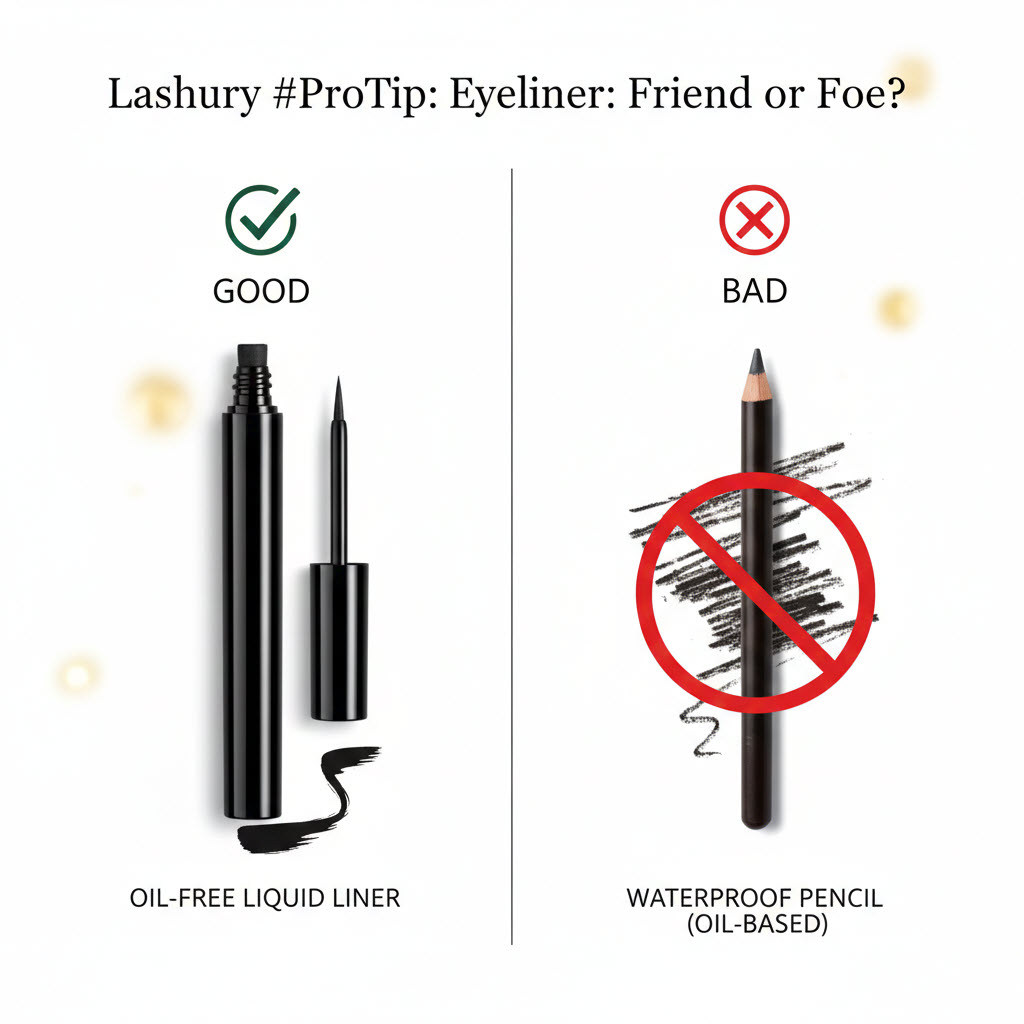
Look for liquid liners that are specifically labeled oil-free. Felt-tip pens are generally safer than pencils because they don’t require “tugging” on the eyelid, which can disturb the lash line.
2. Avoid the “Tightlining” Technique
Avoid applying liner to your “waterline” (the inner rim of your eyelid). This places the product directly against the lash roots and the adhesive bonds, making it nearly impossible to clean without damaging your set.
3. Use a Dedicated Lash Cleanser
If you do wear makeup, always follow up with a professional Lash Foam Cleanser. Unlike standard face washes, these are formulated to break down makeup residue without weakening the cyanoacrylate bond.
| Avoid ❌ | Choose ✅ |
| Waterproof Pencils | Oil-Free Liquid Liners |
| Gel Pots with Wax | Felt-Tip Precision Pens |
| Two-Phase (Oil/Water) Removers | Extension-Safe Lash Foam |
| Micellar Water with Oil | Water-Based Makeup Wipes |
Ready for Your Next Lash Refresh?
Don’t let a makeup mishap ruin your investment. Protecting your bond starts with the right products at home, but consistent professional maintenance is just as vital.
If you’ve noticed your lashes thinning due to makeup use or natural shedding, it might be time for a professional touch-up. For a deep dive into how to keep your set looking flawless year-round—including exactly when you should book your next visit—check out our Complete Eyelash Extensions Infill Guide.

